

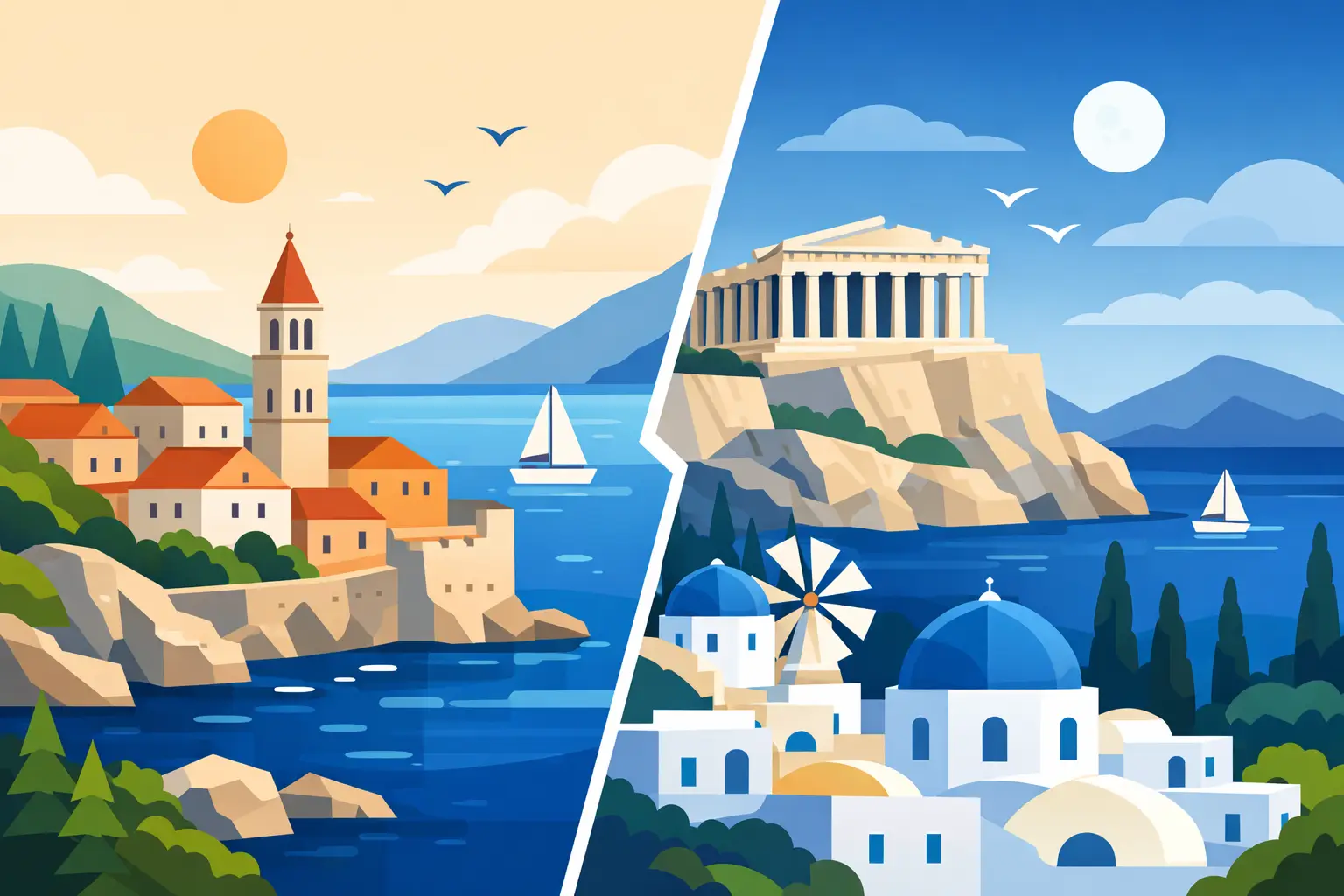
One couple wants calm coastal towns, easy island-hopping, and a week that feels polished without being overplanned. Another wants iconic ruins, postcard sunsets, and beach clubs that stay busy long after dinner. That is usually what a croatia vs greece vacation comes down to – not which country is better, but which one matches the kind of trip you actually want.
Both deliver beautiful coastlines, historic cities, and strong summer appeal. Both can work for couples, families, small groups, and travelers building a broader European itinerary. But they feel different on the ground, and those differences matter when you are comparing value, logistics, and overall pace.
Croatia vs Greece vacation: the core difference
Croatia tends to suit travelers who want a cleaner, more structured rhythm. The country feels compact, organized, and easy to combine with nearby destinations in the Balkans and Central Europe. A trip here often moves smoothly between historic cities, island stays, scenic drives, and national parks. You are not choosing only beach time – you are choosing a well-rounded coastal itinerary.
Greece is usually the stronger pick for travelers who want a classic Mediterranean escape with bigger-name islands, ancient landmarks, and a more distinctly varied island identity. Santorini, Mykonos, Crete, Paros, Naxos, Rhodes – each carries its own style and level of energy. Greece can feel more dramatic and more iconic, but it can also require more decisions and more internal travel planning.
If your priority is balance, Croatia often wins. If your priority is bucket-list impact, Greece often takes the lead.
Beaches and swimming
This is one of the most common deciding points, and it depends on what you expect from a beach day.
Croatia offers exceptionally clear water, beautiful coves, and a coastline that feels clean and refined. The Adriatic is one of the great strengths of the destination. But many beaches are pebbled, rocky, or platform-style rather than long sandy stretches. For some travelers, that is not a drawback at all – the water is stunning, and the coastal scenery is consistently strong. For others, especially families with young children or travelers who picture soft sand and easy beach setups, it can be a real factor.
Greece generally gives you more beach variety. You can find sandy beaches, dramatic cliff-backed bays, calm family-friendly shores, and islands built around a beach-first lifestyle. If the beach is the main event rather than part of a broader itinerary, Greece usually offers more range.
For swimming quality alone, both are excellent. For classic sandy beach expectations, Greece has the edge.
Islands and how you move between them
A lot of travelers start with islands in mind, then realize the transportation experience shapes the entire trip.
Croatia’s island travel is often simpler than people expect, especially along the Dalmatian Coast. Places like Hvar, Brac, Korcula, and Vis work well in combination with Split or Dubrovnik. Distances are manageable, and many itineraries can be built without too much travel fatigue. The pace feels practical. You can see several highlights in one trip without turning the entire vacation into a ferry schedule.
Greece offers more famous island options and a much larger menu overall. That is a major advantage if you know exactly what you want. It can also create complexity. Some island combinations are effortless, while others involve longer ferry rides, flight connections, or careful timing. The reward is variety. The trade-off is more planning.
For a first-time island trip with manageable logistics, Croatia is often the easier sell. For travelers who want to tailor a more distinctive island mix, Greece offers more choice.
Culture, history, and sightseeing
Both countries are rich in history, but the experience is different.
Croatia blends Roman remains, Venetian influence, medieval old towns, and a strong maritime identity. Dubrovnik and Split are the headline names, but smaller places such as Trogir, Korcula, and Rovinj often leave a lasting impression because they are so walkable and well-preserved. Croatia’s historic areas feel compact and efficient to explore, which works well for travelers who like culture but do not want every day to feel museum-heavy.
Greece delivers a deeper sense of ancient civilization at a global level. Athens alone changes the equation with the Acropolis and major archaeological sites. Across the islands and mainland, you find layers of classical history, Byzantine heritage, and traditional village life. If ancient history is central to your vacation goals, Greece is hard to beat.
For travelers who want cultural depth folded into an easy coastal route, Croatia performs extremely well. For travelers who want world-famous antiquity as a core reason to go, Greece stands out.
Food and dining style
Food rarely decides the destination on its own, but it strongly shapes how a trip feels.
Croatia’s cuisine varies by region. Along the coast, expect seafood, olive oil, grilled fish, pasta influences, risotto, and wines that pair well with long lunches by the water. The dining experience often feels polished and understated. It suits travelers who appreciate a Mediterranean table with Central European and Italian touches.
Greece tends to feel more immediately familiar and more casual in the best sense. Taverns, grilled meats, fresh salads, feta, seafood, mezze, and local island specialties create an easy, sociable dining rhythm. Meals can be simple or elevated, but the atmosphere often feels generous and relaxed.
Neither is a poor choice for food-focused travel. Greece may have broader instant appeal for travelers who prioritize casual dining culture, while Croatia often wins with travelers who prefer a slightly more refined coastal restaurant scene.
Price and value
The cost question is more nuanced than many comparison articles admit.
Croatia was once seen as the obvious value pick over Greece. That gap has narrowed, particularly in peak season and especially in hotspots like Dubrovnik and Hvar. In summer, Croatia can be expensive, and waterfront hotels in prime locations are not budget products.
Greece also ranges widely. Santorini and Mykonos can be premium-priced, but other islands and mainland stays offer better value than many travelers expect. A Greece trip can be more affordable than a Croatia trip if you choose your routing carefully.
This is the practical reality: both destinations reward smart itinerary design more than broad assumptions. If you want best value, shoulder season matters in both countries. May, early June, and September are often the sweet spots for weather, pricing, and crowd levels.
Crowds, pace, and overall travel style
Croatia often feels calmer and more contained. Even in popular destinations, the trip structure can remain efficient because travel times are reasonable and the tourism footprint is concentrated in predictable areas. That makes it a strong choice for travelers who want scenic impact without a chaotic pace.
Greece can feel more varied in energy. Some islands are quiet and restorative. Others are social, glamorous, and highly seasonal. Athens adds a major-city layer that Croatia does not really replicate. If you want one trip to include urban history, island romance, and beach time, Greece gives you more contrast.
For couples looking for a balanced, upscale-feeling route with strong logistics, Croatia is often Editor choice. For travelers chasing classic Mediterranean atmosphere with more extremes in mood and setting, Greece is often the better fit.
Who should choose Croatia?
Choose Croatia if you want a streamlined coastal itinerary, clear water, attractive old towns, and easy combinations between mainland highlights and islands. It is especially well suited to travelers who like structured multi-stop trips and want the option to connect the coast with other Balkan destinations.
This is also a strong destination for travelers who value operational simplicity. If you do not want to spend weeks comparing ferries, islands, and transfer patterns, Croatia is easier to shape into a polished one-week or ten-day vacation.
Who should choose Greece?
Choose Greece if your ideal trip includes sandy beaches, iconic island imagery, major ancient sites, and more personality differences from one stop to the next. It is the stronger pick for travelers who have always pictured whitewashed villages, blue-domed churches, and a vacation centered around the islands.
Greece also suits repeat Mediterranean travelers who want to be selective. Once you know whether you prefer lively, romantic, family-friendly, or quieter islands, the country gives you excellent range.
The better answer for most travelers
If you are choosing between the two for a first trip and want the easiest high-quality experience, Croatia is often the safer booking. It is compact, scenic, and efficient, with enough culture and island appeal to satisfy most travelers without overcomplicating the route.
If your trip is about dream-destination impact and you are willing to invest a little more thought into the itinerary, Greece often delivers the bigger emotional payoff.
That is why the best croatia vs greece vacation decision starts with your travel style, not a ranking. Pick Croatia for balance and simplicity. Pick Greece for iconic variety and island-focused appeal. If you can only do one now, choose the destination that matches the week you want to have – not the one you think you are supposed to choose.