

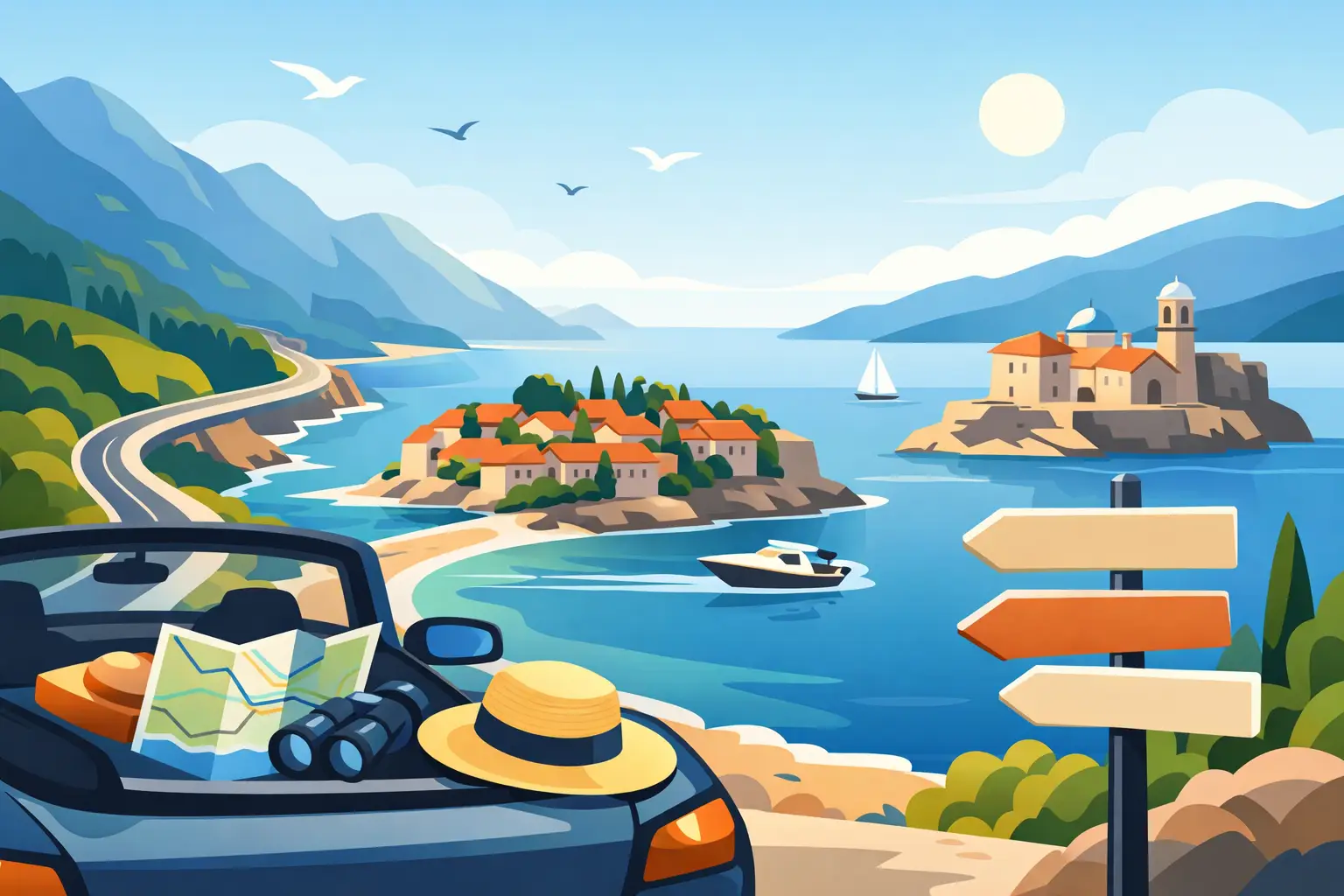
Montenegro’s coast is short on the map and surprisingly full on the ground. That is exactly why a good montenegro coastal trip guide matters. In just a few hours of driving, you can move from medieval stone towns to sleek marinas, quiet beaches, monastery viewpoints, and ferry crossings that change the pace of the day.
For travelers who want the Adriatic without overcomplicating the logistics, Montenegro works especially well. Distances are manageable, the highlights are concentrated, and the route can be shaped around how you actually like to travel – slower with scenic stops, or more structured with a clear hotel base and day trips.
How to plan a Montenegro coastal trip guide that works
The first decision is not where to start. It is how much moving around you want to do. Montenegro’s coastline looks easy to cover, and in pure mileage it is, but summer traffic can turn a short transfer into a slow one. If you prefer a smoother experience, choose two bases instead of changing hotels every night.
For most travelers, 4 to 7 days is the sweet spot. Four days gives you enough time for Kotor Bay, Perast, Budva, and at least one southern coastal stop. A full week allows a more relaxed pace, with room for Sveti Stefan viewpoints, Petrovac, Bar, or Ulcinj.
The most practical route usually runs from north to south or south to north, depending on your arrival point. If you are combining Montenegro with Croatia, entering via Dubrovnik and continuing toward Kotor is a strong option. If you are pairing the coast with inland Montenegro or Albania, finishing farther south can make the overall itinerary cleaner.
Best coastal route: Kotor Bay to Ulcinj
Kotor Bay is where most first-time visitors should begin. It has the strongest concentration of landmark scenery and some of Montenegro’s most recognizable historic settings. Kotor itself is the headline stop – fortified walls, stone lanes, church squares, and a waterfront backed by steep mountains. It is popular for good reason.
That said, staying directly in Kotor is not always the best fit for every traveler. During peak season, it can feel crowded when cruise traffic is in port. If you want the bay experience with a calmer evening atmosphere, Perast or Herceg Novi can be better choices. Perast is smaller and more polished, while Herceg Novi feels more lived-in and practical.
From Kotor Bay, the route naturally continues to Budva Riviera. Budva is busier, more resort-driven, and more nightlife-oriented than the bay. Some travelers like that contrast. Others find it too commercial compared with Kotor’s historic appeal. The trade-off is simple: Budva gives you easier beach access and more hotel variety, but less of the quiet stone-town atmosphere that many people associate with Montenegro.
Sveti Stefan is one of the most photographed coastal viewpoints and worth including, even if just as a stop rather than an overnight. Access policies around the islet itself can vary, so it is best approached as a scenic highlight, not the center of your plan.
Farther south, Petrovac offers a gentler pace. It is a sensible stop for travelers who want a beach town without Budva’s energy. Bar is more functional and less romantic, but it can work well logistically, especially for onward travel. Ulcinj brings a different feel again, with a longer beach, stronger Albanian cultural influence, and a looser, less polished atmosphere that some travelers find refreshing.
Where to stay on the Montenegro coast
If you only want one base, stay around Kotor Bay if your priority is scenery and history. Stay in Budva or near Becici if your priority is beach time and hotel convenience. There is no universal best choice. It depends on whether you picture your evenings in a stone old town or in a more resort-style setting with easier access to the water.
For a two-base trip, one stay in the bay and one farther south is usually the best value. This setup limits repacking while still giving you a broader view of the coast. A common split is 2 to 3 nights around Kotor or Perast, followed by 2 to 3 nights in Budva, Petrovac, or near Sveti Stefan.
Travelers booking structured tours often benefit from this approach because it balances scenic highlights with operational efficiency. It also reduces the risk of spending too much of a short trip dealing with transfers and parking.
When to go and what to expect
Late May, June, and September are the strongest months for a Montenegro coast itinerary. The weather is usually favorable, sea conditions are often pleasant, and the roads are more manageable than in the height of summer. July and August bring the fullest resort atmosphere, but also the highest traffic and the greatest pressure on parking, restaurants, and old-town spaces.
If swimming matters, shoulder season can be slightly more variable. If comfort and mobility matter more, shoulder season is often the better choice. This is one of those trips where the best month depends on your travel style, not just the weather chart.
Cruise schedules also shape the experience in Kotor. A town visit early or late in the day can feel entirely different from a midday stop when ships are in. If your trip is flexible, timing around that detail can improve the quality of the visit more than people expect.
Getting around the coast
A rental car gives the most flexibility, especially if you want to combine viewpoints, smaller towns, and beach stops. It is the best option for travelers comfortable with narrow roads, summer congestion, and parking strategy. The downside is that driving can feel more tiring than the short distances suggest.
Private transfers are often the better call for travelers who want a cleaner, more managed experience. They remove the parking issue and make border or airport connections easier. For travel advisors and clients booking multi-stop Balkan itineraries, this is often the most dependable setup because it keeps timing under control.
Public buses are available and can work between major coastal towns, but they are better for budget-focused trips than for travelers who want a polished itinerary. If your goal is convenience, not improvisation, organized transport usually wins.
One local detail worth knowing is the Kamenari-Lepetane ferry across the bay. It can save time compared with driving around the full bay, but summer waits are possible. It is useful, just not something to build a tightly timed day around.
What deserves your time and what can be a quick stop
Kotor deserves real time, ideally one night or more. Perast can be a half-day stop or an overnight if you want a quieter, more refined setting. Budva is worth seeing, but not every traveler needs several nights there unless beach clubs, nightlife, or resort facilities are a priority.
Sveti Stefan is often best as a scenic stop. Petrovac suits a slower overnight. Bar is more practical than essential for most first-time visitors, while Ulcinj is worth the extra distance if you want a broader picture of Montenegro’s coastline and a less standardized resort feel.
If you only have three days, do not try to cover everything. Focus on Kotor Bay, one Budva Riviera stop, and one scenic southbound drive. Montenegro rewards selectivity more than box-checking.
A few planning mistakes to avoid
The biggest mistake is underestimating transit time in summer. The second is assuming every coastal stop offers the same atmosphere. Kotor Bay, Budva, and Ulcinj are not interchangeable. They serve different kinds of trips.
Another common issue is booking strictly for price without thinking about access. A lower room rate outside the old towns or beach zones can be good value, but only if you are comfortable with extra driving, uphill walks, or limited evening options. On a short coastal trip, location often matters more than travelers expect.
It is also worth checking whether your trip is coast-only or part of a wider Balkan itinerary. Montenegro pairs very well with Dubrovnik, inland Montenegro, or northern Albania, but only if the sequencing is practical. A good route is not just about famous places. It is about keeping the flow of the trip easy.
Montenegro coastal trip guide for first-time visitors
For first-time visitors, the strongest version of a montenegro coastal trip guide is not the one with the most stops. It is the one that balances old towns, time by the water, and manageable transfers. A classic 5-day setup works well: start in Kotor Bay, continue to Budva or near Sveti Stefan, then decide whether your final stretch should be a relaxed beach town or a deeper push south.
That structure gives you Montenegro’s signature scenery without rushing the coast into a checklist. It also keeps the trip suitable for couples, small groups, and travelers who want a polished regional experience rather than a self-drive puzzle.
If you plan the coast with realistic timing and the right hotel bases, Montenegro feels easy in the best sense of the word. The route is compact, the scenery changes quickly, and even a short trip can feel complete when the logistics are handled well.