
A Balkan trip can look simple on a map and become complicated the moment you start booking it. Border crossings, language differences, seasonal ferry schedules, mountain roads, and uneven transport links all shape the real experience. That is why the choice between Balkans tours vs independent travel matters more here than it might in Western Europe.
For some travelers, planning every stop from Ljubljana to Kotor is part of the appeal. For others, the better value is a structured itinerary that removes friction and lets the trip run on schedule. Neither option is automatically better. The right fit depends on how you travel, how much time you have, and how much uncertainty you are willing to manage.
Balkans tours vs independent travel: what actually changes?
The biggest difference is not just who books your hotels. It is who carries the operational burden of the trip.
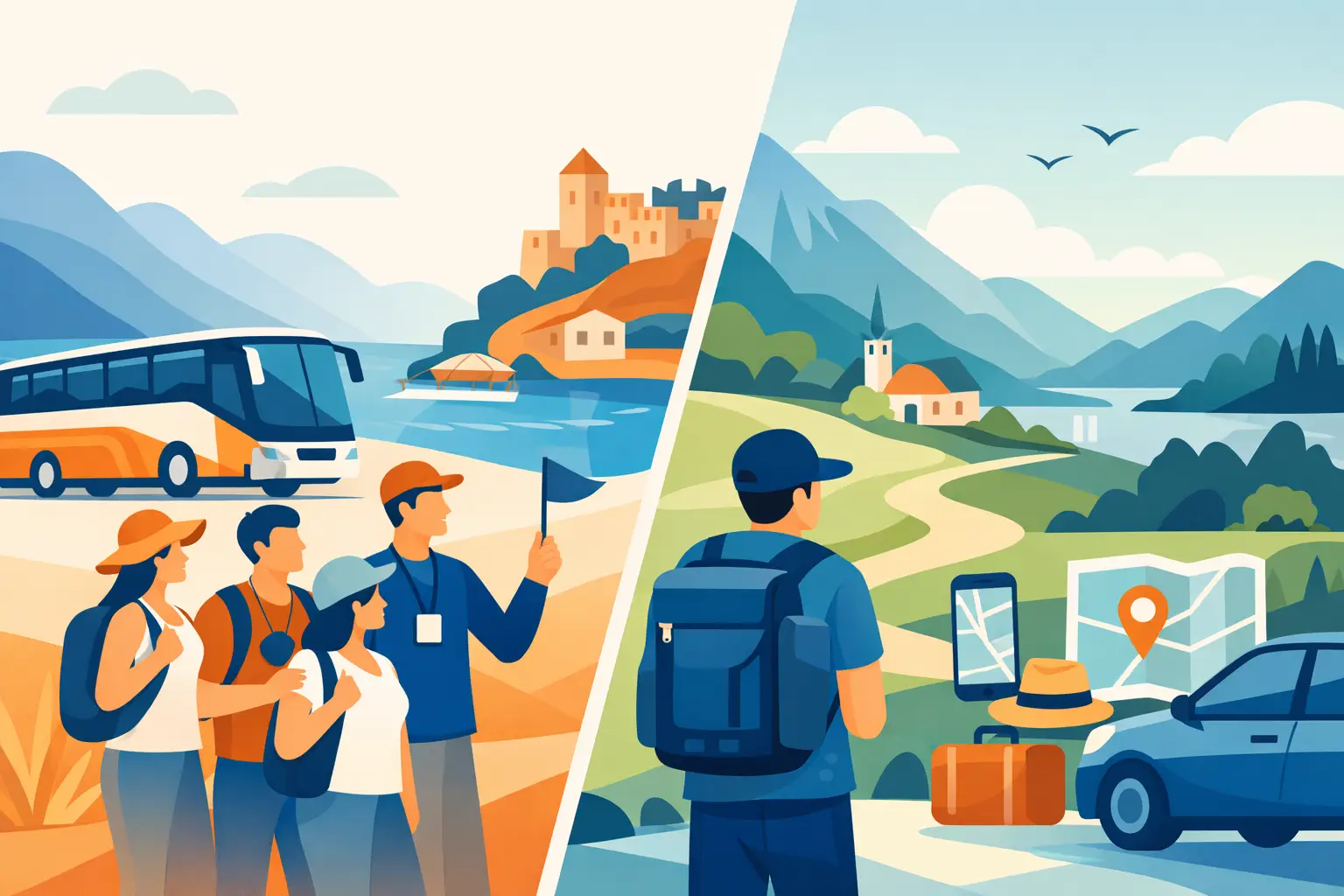
On an organized tour, routing, transport, hotel coordination, timing, and local touring are handled in advance. That matters in a region where multi-country travel can involve different currencies, road conditions, local regulations, and transportation standards from one destination to the next. A well-built tour turns a complicated route into one bookable product.
With independent travel, you keep full control. You decide whether to stay longer in Dubrovnik, skip a capital city, or reroute toward Albania or North Macedonia at short notice. That freedom is valuable, but it comes with more moving parts. You are responsible for connecting all the pieces, and in the Balkans, those pieces do not always connect as neatly as first-time visitors expect.
When a Balkans tour is the better choice
A tour usually makes the most sense when the trip covers several countries in one itinerary. The Balkans reward regional travel – Croatia, Montenegro, Bosnia and Herzegovina, Serbia, Romania, Bulgaria, Albania, and Slovenia all offer distinct character within relatively close range. But stitching them together efficiently is where planning gets technical.
A strong escorted or small-group program solves the main friction points. Transfers are coordinated. Hotels are selected with route logic in mind. Sightseeing is timed properly. You are less likely to lose half a day figuring out a bus connection, dealing with a rental car issue, or waiting on an unclear border procedure.
This matters even more for travelers with limited vacation time. If you have ten or twelve days and want a genuine multi-country experience, structure protects your itinerary. Instead of spending energy on logistics, you spend it on the trip itself.
Tours also tend to deliver better results for travelers who want context, not just access. The Balkans are layered destinations. Imperial history, religion, language, post-Yugoslav identity, Ottoman influence, and contemporary local culture often sit side by side. A guided framework can make those layers easier to understand, especially in places where signage or self-guided interpretation is limited.
For many US travelers, there is another advantage: predictability. Pre-arranged transport, known hotel standards, and a set daily pace reduce decision fatigue. That can be especially appealing in destinations that are less familiar than Paris or Rome.
When independent travel works best
Independent travel tends to work well when your route is shorter, your schedule is flexible, and your expectations are realistic.
If you want to focus on one country or one compact part of the region, self-planning can be very rewarding. A Croatia-only coastal route, a Slovenia city-and-nature trip, or a Romania itinerary centered on a few major stops can be managed well by travelers who enjoy research and are comfortable adjusting on the go.
This style is also a good fit for people who prefer slower travel. If your ideal trip includes four nights in one place, long lunches, unscheduled detours, and time to wander without a fixed group schedule, independent travel gives you room to shape the trip around your own rhythm.
It can also work for repeat visitors. Travelers who already understand the region’s basics often feel more comfortable designing their own routing because they know what trade-offs to expect. They may accept a longer transfer or a less direct connection in exchange for complete control.
The key is being honest about tolerance for friction. Independent travel is not only about freedom. It is also about problem-solving in real time.
Cost: cheaper is not always better value
Many travelers assume independent travel is always cheaper. Sometimes it is. Often it is not.
A solo traveler or couple booking transport, hotels, guides, and intercity transfers separately may pay more than expected, especially in peak season or on multi-country routes. Private transfers can become expensive quickly. Rental cars can add fuel, parking, tolls, and one-way drop fees. Last-minute adjustments usually cost more, not less.
Tours can look more expensive upfront because the price is packaged. But bundled rates often include components that would be costly or time-consuming to arrange separately, especially when the route spans several destinations. There is also a hidden value in reduced planning time and lower operational risk.
That said, independent travel can be the better budget play if you are comfortable with public transportation, mid-range guesthouses, and a flexible pace. Backpacker-style or lightly structured travel still has a place in the Balkans, particularly for travelers who treat variability as part of the experience rather than a problem.
So the question is not just which option has the lower headline price. It is which option gives you the best use of your time, comfort level, and trip goals.
Flexibility vs efficiency
This is the core trade-off.
Independent travel gives you maximum flexibility. You can change towns, add nights, skip sites, and follow local recommendations without needing group consensus. That freedom is real, and for some travelers it is the main reason to go independently.
Tours, however, are built for efficiency. They reduce dead time between destinations and help travelers cover more ground cleanly. In the Balkans, that can be a major advantage. A route that looks short in mileage may take much longer in practice due to roads, terrain, or border traffic.
If your priority is to see the region broadly and comfortably, a tour often wins. If your priority is to shape each day yourself, independent travel wins. Most travelers are not choosing between freedom and restriction. They are choosing which type of compromise feels easier.
Balkans tours vs independent travel for first-time visitors
First-time visitors usually underestimate how different neighboring Balkan destinations can be in practical terms. Entry procedures, road quality, service standards, local language use, and tourism infrastructure can shift noticeably across borders. That is part of the region’s appeal, but it also creates planning complexity.
For a first trip, an organized itinerary is often the stronger choice if you want to see multiple countries without spending weeks preparing. It gives you a curated introduction to the region and lowers the chance that logistics will dominate the experience.
Independent travel is still possible for first-timers, but it works best when the route is modest. Trying to fit six countries into one self-planned trip is where many itineraries start to break down.
Who should choose which option?
Travelers who value convenience, guided context, coordinated hotels, and efficient multi-country routing are usually better served by a tour. This is especially true for couples, adult leisure travelers, and small groups who want confidence at every stage of the trip.
Travelers who enjoy research, can absorb occasional delays, and prefer a slower or more customized pace are often happier going independently. They are not paying to remove complexity because handling complexity is part of how they like to travel.
There is also a middle ground. Many travelers do best with structured touring in the more logistically demanding parts of the Balkans, then add independent city stays before or after. That hybrid approach gives you support where it matters most without making every day fully scheduled. It is one reason regional specialists such as Master DMC are useful – they can package the complex portion of the journey into a more bookable format.
The best choice is the one that protects the kind of trip you actually want. If you want ease, pace, and reliable execution across multiple countries, choose the tour. If you want control, flexibility, and time to improvise, go independently. The Balkans reward both styles, but they reward realistic planning even more.