

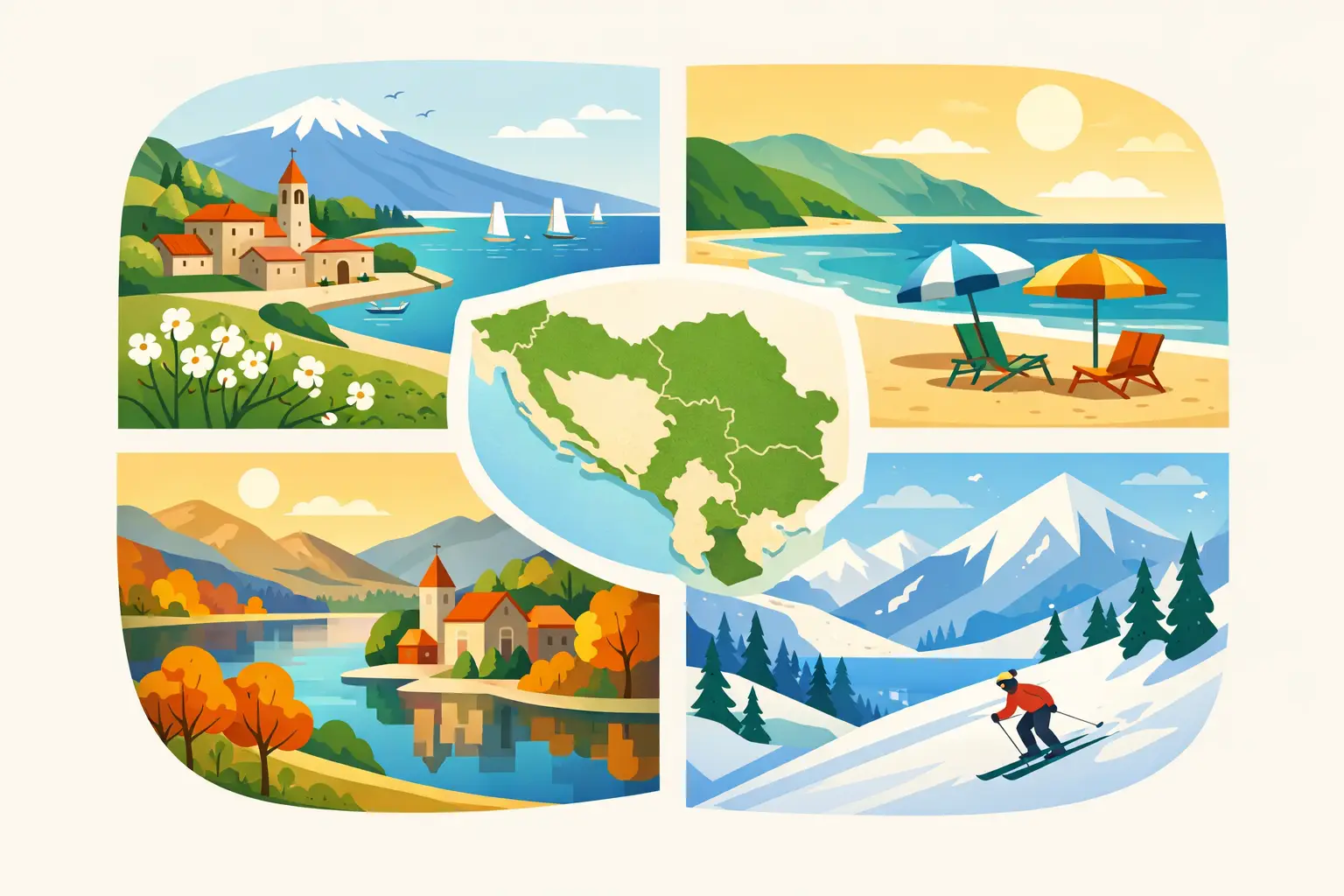
A July beach week in Croatia and a late-October city break in Romania can both be excellent Balkan trips – but they deliver completely different experiences. That is why the real answer to when to visit the Balkans depends less on a single “best month” and more on what you want from the region: coastline, culture, mountain scenery, festivals, lower prices, or a smooth multi-country itinerary.
The Balkans are not one uniform destination. Coastal Montenegro, inland Serbia, alpine Slovenia, and southern Albania can sit in very different weather patterns at the same time. Travel distances are manageable, but the region rewards good timing. If you want to pair several countries in one trip, season matters not only for comfort but also for ferry schedules, mountain access, local events, and crowd levels.
When to visit the Balkans for the best overall experience
For most travelers, the strongest windows are May to June and September to early October. These months usually offer the best balance of mild weather, easier touring conditions, and fewer crowds than peak summer. They are especially well suited to escorted tours, small-group itineraries, and multi-country routes where you want reliable sightseeing days without extreme heat or holiday congestion.
Late spring brings green landscapes, longer daylight, and comfortable temperatures across much of the region. Historic cities are active but not yet overwhelmed, and coastal areas feel lively without reaching their busiest point. Early fall offers similar advantages, with warm sea conditions in many Adriatic destinations and a slightly calmer pace inland.
If your priority is a broad first-time itinerary that might include Croatia, Bosnia and Herzegovina, Montenegro, Albania, North Macedonia, Bulgaria, or Romania, these shoulder-season periods are often the best value and the easiest to manage.
Spring in the Balkans: best for touring and variety
Spring, especially from April through June, is one of the smartest times to travel through the Balkans. Cities are walkable, national parks look fresh, and the temperatures are generally more forgiving than in mid-summer. This is the season that works well for travelers who want a little of everything – old towns, scenic drives, food experiences, and cultural stops across multiple countries.
April can still be mixed, particularly in mountain areas and some inland regions, where mornings remain cool and occasional rain is common. Still, it has clear advantages. Prices are often more favorable, major sights are easier to enjoy, and destinations that feel crowded in summer are more relaxed.
May and June are stronger all-round choices. Dubrovnik, Kotor, Ljubljana, Split, Sarajevo, and Belgrade are all more comfortable for full-day sightseeing before peak heat arrives. Albania and Montenegro begin to feel coastal, but without the intense traffic and packed beaches of high season. For travelers who prefer structured touring over long beach days, this is often the sweet spot.
The trade-off is that sea temperatures in early spring may still be too cool for some visitors, and a few smaller coastal operations do not reach full seasonal rhythm until later in the season.
Summer in the Balkans: best for beaches and festival energy
From July through August, the Balkans are at their busiest and hottest, especially along the Adriatic coast. If your ideal trip means swimming, island hopping, open-air dining, and late evenings in lively waterfront towns, summer is the obvious choice. This is when Croatia, coastal Montenegro, and parts of Albania are fully in season.
The atmosphere can be excellent. Beach clubs, boat excursions, and resort towns operate at full capacity, and the coast has the most energy. For travelers focused on sea access and classic summer vacation timing, this season works well.
But summer is not the easiest period for every itinerary. Popular coastal destinations are crowded, road transfers can take longer, and hotel rates are usually at their highest. Inland capitals and heritage cities can also become quite hot, making full-day walking tours less comfortable. If you are planning a multi-country route that combines coast and cities, midsummer requires more careful pacing.
A practical compromise is late June or early September. You still get warm weather and a strong summer atmosphere, but usually with better touring conditions and less pressure on accommodations and transport.
Best summer choices by travel style
If you are traveling primarily for beaches, Croatia and Montenegro are strongest in July and August, while Albania offers an appealing mix of coastline and value, especially for travelers open to newer tourism infrastructure. Slovenia is a good summer option for lake and mountain scenery, and Bulgaria works well for Black Sea holidays paired with cultural touring inland.
If you want cities first and beaches second, consider limiting the coastal portion and adding inland overnights with lighter daytime pacing. That creates a more balanced trip and avoids turning every day into a heat-management exercise.
Fall in the Balkans: best value for culture and coast
Fall is arguably the most underrated answer to when to visit the Balkans. September is one of the strongest months in the entire calendar. The sea remains warm in many coastal areas, vineyards and countryside are active, and major destinations feel less compressed than they do in August.
For many travelers, September delivers the most complete version of the region. You can combine Dubrovnik with Mostar, Kotor with inland Serbia, or Romania with Bulgaria and still expect generally favorable conditions for sightseeing. Restaurants, hotels, and excursion providers are still operating at a high level, but the pace is more manageable.
October shifts the experience toward culture, food, and urban touring. The Adriatic becomes quieter, but that can be a benefit if you prefer scenic stays over peak beach time. Inland destinations such as Bucharest, Transylvania, Sofia, Belgrade, and Skopje are often very appealing in early to mid-fall. Daylight shortens, and some coastal services begin winding down, so this is a better season for land-based itineraries than for heavy island or beach planning.
For couples, small groups, and travelers looking for a polished multi-country trip without summer pricing, early fall is often Editor choice.
Winter in the Balkans: best for cities, Christmas markets, and value
Winter is the least universal season, but it should not be dismissed. From late November through February, the Balkans shift away from coastal travel and toward city breaks, festive travel, and mountain areas. If your priorities are Christmas markets, lower rates, fewer tourists, and a more local feel, winter can be a good fit.
Cities like Ljubljana, Zagreb, Belgrade, and Bucharest can be rewarding in winter, especially around the holiday period. Romania and Bulgaria also make sense for combining urban stays with snow-oriented travel. The main caution is that winter is not ideal for broad scenic touring if your trip depends on long road days, panoramic mountain routes, or coastal resort atmosphere.
This is the season where itinerary design matters most. Some destinations shine, others become very quiet. A winter Balkan trip works best when it is intentionally built around seasonal strengths rather than treated like a summer route with colder weather.
The best time by destination type
If you are drawn to the Adriatic coast, target June or September for the best overall balance, with July and August reserved for travelers who specifically want peak beach season. If your focus is historic cities and cultural touring, May, June, September, and October are the most reliable choices. For mountains, lakes, and scenic drives, late spring through early fall is generally strongest, though exact timing depends on elevation.
For first-time visitors trying to see several Balkan countries in one trip, shoulder season is usually Best value. Border crossings, road journeys, city sightseeing, and hotel availability are simply easier to manage when the region is not at full summer pressure.
How long your trip should influence timing
Short trips need sharper timing than longer ones. If you only have five to seven days, travel in a shoulder month and keep the routing efficient. You will get more from each destination when weather and crowds are working in your favor.
Longer trips of 10 to 14 days can absorb more seasonal variation. In summer, for example, a two-week itinerary can combine coastal downtime with cooler mountain or inland sections. In spring and fall, longer itineraries are easier to build across several countries because daily touring conditions are more consistent.
That is one reason many structured regional programs are scheduled around May, June, and September. They allow for better pace, cleaner logistics, and a stronger overall guest experience across the Balkans.
So, when should you visit the Balkans?
If you want the most balanced answer, choose May, June, or September. These months usually offer the strongest mix of weather, value, touring comfort, and destination range. If your trip is all about beaches and summer energy, go in July or August. If you care more about culture, food, and easier movement between countries, prioritize spring or early fall.
The Balkans reward travelers who match the season to the experience they want. Plan around that, and the region becomes not just easier to travel – but far more memorable. For anyone comparing routes, durations, and countries, that is where expert trip design makes the biggest difference.