

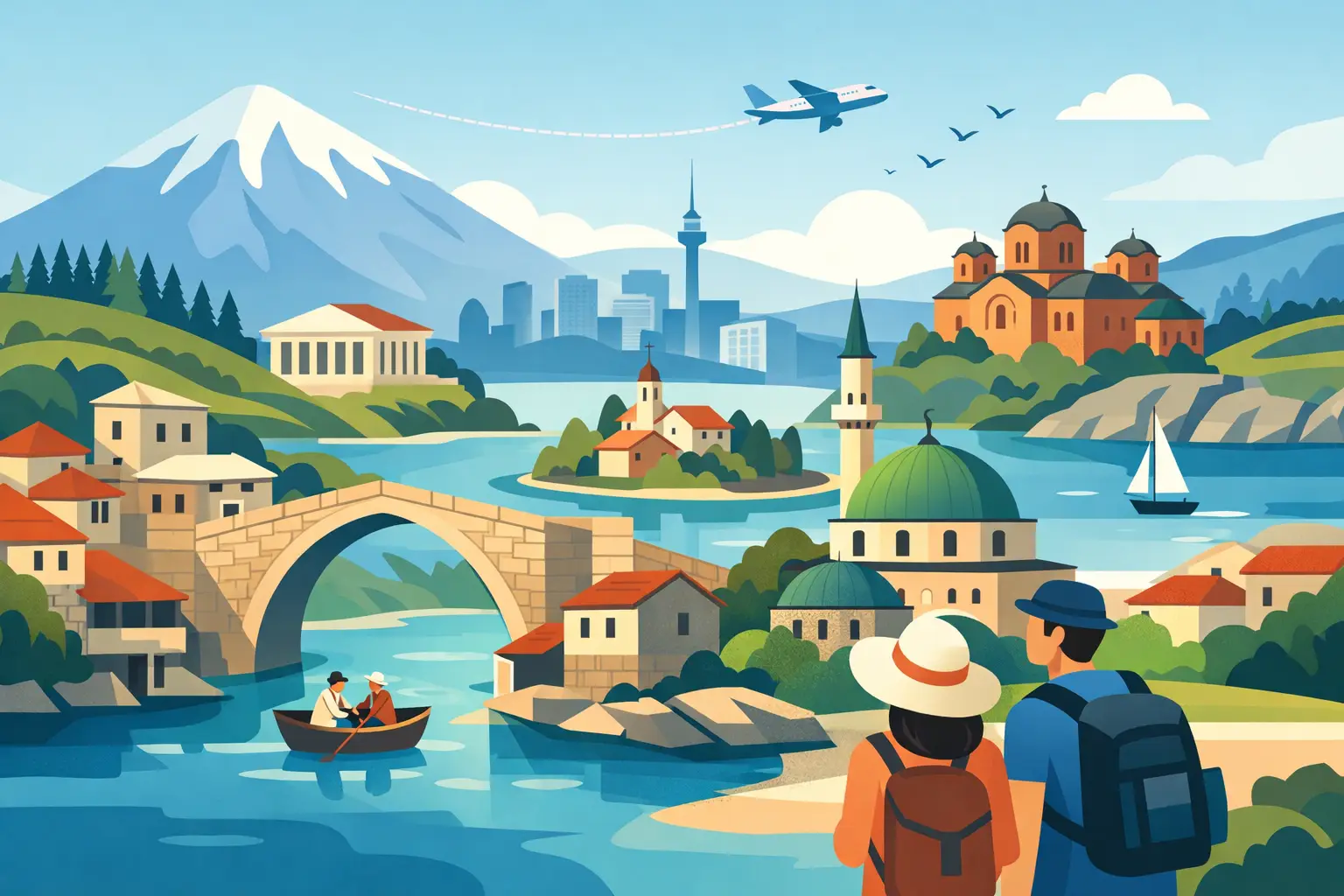
A Balkan trip can look compact on a map and feel surprisingly complex once you start planning it. Borders, driving times, hotel standards, language differences, and uneven transport links can turn a simple idea into a patchwork itinerary. That is exactly why balkan multi country tours continue to appeal to travelers who want to see more than one country without spending weeks coordinating every moving part.
The Balkans reward good routing. This is not a region where adding more countries automatically creates a better trip. In many cases, the best value comes from an itinerary that balances variety with realistic travel days, giving you enough time to experience historic cities, coastal towns, mountain landscapes, and local culture without feeling like you are living out of a suitcase.
Why balkan multi country tours work so well
Multi-country travel in the Balkans solves a practical problem. The region offers a high concentration of distinct destinations within relatively short geographic distances, but the travel infrastructure is not always as straightforward as in Western Europe. That makes escorted or professionally managed touring especially effective.
A well-built route can connect places that naturally belong together. Croatia and Montenegro are a common pairing for travelers who want Adriatic scenery, old towns, and coastal atmosphere. Serbia, Bosnia and Herzegovina, and North Macedonia often suit travelers looking for cultural depth, Ottoman and Austro-Hungarian influences, and a stronger inland focus. Romania and Bulgaria tend to attract travelers interested in medieval towns, Orthodox heritage, and less crowded European touring.
The real advantage is not simply seeing more places. It is reducing the friction between them. When hotels, transport, timing, and border crossings are organized in advance, the trip feels more like a connected journey and less like a logistical exercise.
How to evaluate balkan multi country tours
Not every itinerary with several flags on the map is built well. Some tours are designed around efficient regional flow. Others are designed to look ambitious on paper. The difference matters.
Start with pace. A seven-day tour covering four or five Balkan countries may sound impressive, but it usually comes with trade-offs. You may get a strong overview, especially if this is your first visit, yet the experience will be more panoramic than immersive. If your priority is depth, local meals, guided city touring, and time to explore on your own, a nine- to twelve-day itinerary often delivers a better balance.
Next, look at the route logic. The strongest tours move in a way that minimizes backtracking. For example, a route that starts in Ljubljana, continues through Croatia, and finishes in Montenegro can make operational sense. So can an inland route connecting Belgrade, Sarajevo, Mostar, and Dubrovnik, depending on the tour style. If the itinerary jumps around to include famous names that do not connect naturally, expect longer transfer days and less time on the ground.
Also pay attention to overnights. Two nights in at least a few key locations usually improve the experience. One-night stops can work for transit cities, but too many of them make a tour feel rushed. This is especially true in the Balkans, where part of the appeal is slowing down enough to enjoy a waterfront promenade, a historic quarter after day-trippers leave, or a long regional dinner.
The best route styles for different travelers
There is no single best Balkan circuit. The right option depends on what kind of traveler you are.
Coastal routes
If you want scenic drives, UNESCO-listed old towns, and a classic summer feel, coastal-focused itineraries are the most accessible starting point. Croatia, Montenegro, and sometimes Slovenia fit this profile well. These tours tend to appeal to first-time Balkan travelers who want comfort, beautiful settings, and a familiar rhythm of guided sightseeing mixed with leisure time.
The trade-off is popularity. Coastal destinations are often the most in-demand and can feel crowded in peak season. If timing is flexible, shoulder season usually gives you a better experience without losing the appeal.
Cultural inland routes
Travelers who care more about history, architecture, religion, and layered identities often do better inland. Serbia, Bosnia and Herzegovina, North Macedonia, Bulgaria, and Romania offer a different kind of trip – less resort-oriented, more rooted in local culture and regional complexity.
These tours can feel richer for repeat Europe travelers who want something beyond the standard capitals-and-coast format. They are also better suited to travelers comfortable with destinations that are less polished but often more memorable.
Mixed itineraries
For many travelers, the best value comes from combining coast and interior. A route that includes Dubrovnik, Kotor, Mostar, and Sarajevo, for example, brings together scenery, history, and strong cultural contrast within one trip. Mixed itineraries usually work best when they keep the country count reasonable and avoid trying to cover the entire peninsula in one go.
What separates a good tour from a stressful one
The first marker is operational realism. Border procedures, road travel times, and city access all affect the day-to-day experience. A dependable tour operator accounts for these variables instead of presenting an idealized version of how long each move should take.
The second is hotel strategy. In the Balkans, location can matter as much as star rating. A well-located hotel near a walkable old town or city center often improves the trip more than a higher-category property on the outskirts. That is particularly relevant in places where evening atmosphere is part of the appeal.
The third is guided structure. Some travelers want a fully escorted coach tour with fixed departures and a clear schedule. Others prefer a more independent format with arranged hotels, transportation, and selected sightseeing. Both can work. The key is knowing what you are buying. If you value convenience but still want flexibility, small-group or semi-structured touring often hits the middle ground.
When longer is better and when it is not
Longer tours are not automatically better tours. A 14-day itinerary can be excellent if it gives enough time in major stops and keeps travel days proportionate. It can also become repetitive if too many destinations blur together.
Shorter tours are often ideal for travelers adding the Balkans to a broader Europe trip. If you already plan to spend time in Central Europe or the Mediterranean, a compact Balkan segment can work well as long as it is regionally focused. Think two to three countries, not six.
For first-time visitors, eight to ten days is often the strongest starting point. That range usually allows for meaningful sightseeing, varied landscapes, and manageable transit without overcommitting. For travel advisors building client itineraries, it is also a practical duration with broad appeal.
Seasonal timing matters more than many travelers expect
Summer is the obvious choice, especially for Adriatic routes, but it is not always the smartest one. July and August bring energy and long daylight hours, yet they also bring higher prices, busier roads, and more crowded historic centers.
Spring and fall often offer the best overall touring conditions for balkan multi country tours. You still get favorable weather in many destinations, but with better pacing on the ground and a more comfortable sightseeing experience. Inland capitals and cultural circuits are especially good in shoulder season.
Winter can work for city-based routes, Christmas market extensions, or travelers focused on culture rather than coast. But if your itinerary depends heavily on scenic road travel and outdoor time, the colder months require more flexibility.
What travelers should confirm before booking
The basics matter. Check arrival and departure cities, inclusions, pace, and whether entrance fees or local guides are included. In this region, it also helps to understand whether the tour relies mainly on one coach throughout or combines multiple local arrangements.
Group size matters too. Large groups can offer better price efficiency, while smaller groups tend to move more easily through historic centers and allow for a more relaxed experience. Neither is inherently better. It depends on your priorities and budget.
This is also where regional expertise becomes a real advantage. A specialist such as Master DMC can build or source itineraries with stronger local logic because the region is not treated as an add-on. That usually shows up in better sequencing, more practical inclusions, and fewer avoidable gaps between what is sold and what works on the ground.
The best balkan multi country tours do not try to show everything. They make smart choices, connect destinations that belong together, and leave you feeling that the region opened up instead of rushing past the bus window. If you choose the route with the same care you choose the destinations, the trip is far more likely to feel worth repeating.